
White gold replating: why your ring has turned yellow, and how we fix it
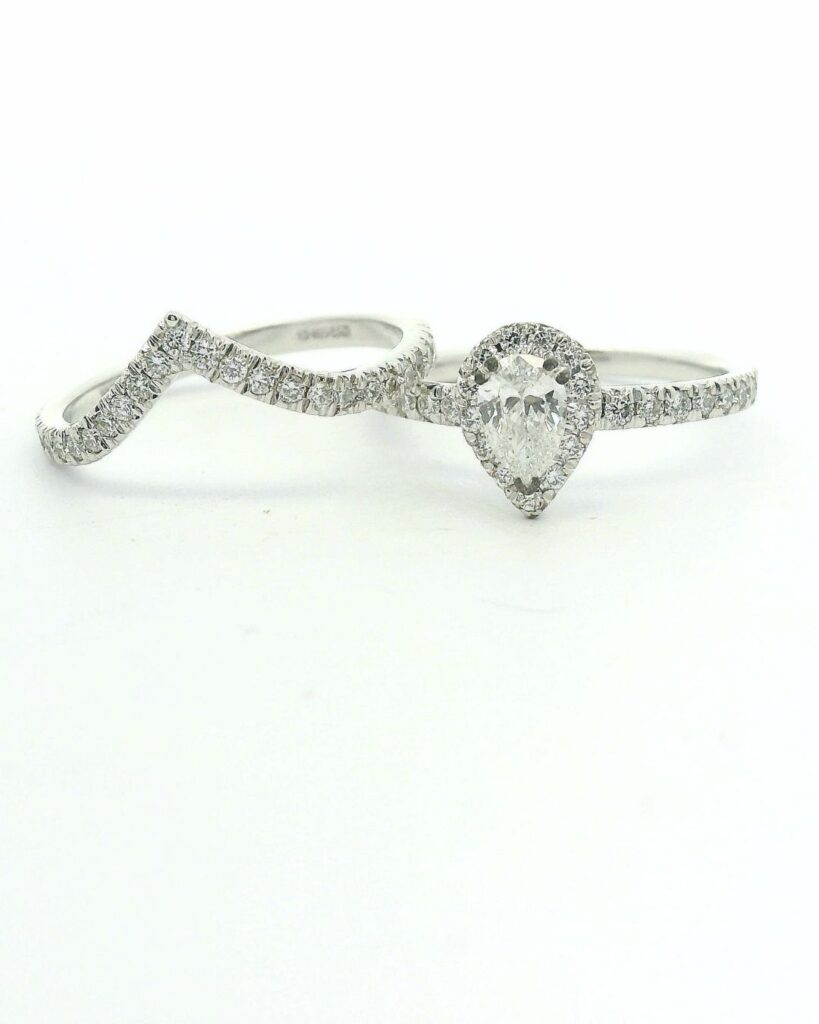
Your white gold ring has started to look yellow. Nothing is wrong with it. The rhodium plating has worn thin, and the natural colour of the gold is showing through.
Replating puts the white finish back. We clean the ring, polish it, and plate it with fresh rhodium in our Glasgow workshop. A jeweller looks at your ring first, and we tell you the cost before we start. Your ring never leaves the building.
Why white gold turns yellow
There is no such thing as pure white gold. All gold comes out of the ground yellow.
To make white gold, a jeweller mixes yellow gold with white metals such as palladium and silver. The result is a pale, warm grey. It is close to white, but it is not the bright white you see in a shop window.
That bright white comes from rhodium. Rhodium is a hard, white metal in the platinum group. Most white gold rings sold in the UK carry a thin layer of it.
The layer is thin. Every time your ring rubs against a desk, a steering wheel, or a gym bar, a little wears away. When enough has gone, the warmer colour underneath starts to show.
So a yellow tinge is not a fault. It does not mean your ring is fake, or that the gold is poor. It means you have worn it, which is what it is for.
How do you know it is time?
Look at the underside of the band first. That part takes the most wear.
- The back of the band looks warmer than the top
- The ring looks dull next to a newer white gold or platinum piece
- You can see a patchy line where white meets yellow
- Your engagement ring and wedding band no longer match
How long does rhodium plating last?
On a ring you wear every day, expect one to three years.
It depends on you more than on the ring. These things wear plating faster:
- Manual work, weights, and anything that grips metal
- Hand sanitiser, bleach, and chlorine in pools
- Perfume, hand cream, and hair products
- Stacked rings that rub together
Earrings and pendants last far longer, because nothing rubs against them. Some never need replating at all.
What happens at the bench
Rhodium plating does not fill scratches. If we plated over a scuffed ring, you would get a bright white scuffed ring. So most of the work happens before the plating.
- We check the ring. A jeweller looks at the claws, the setting, and every stone. If something is loose, we tell you before we go any further.
- We clean it. The ring goes through an ultrasonic bath to lift out dirt, soap, and hand cream.
- We polish it. We take out the surface scratches by hand so the metal is smooth and even.
- We clean it again. Any trace of polish or grease stops the rhodium from taking.
- We plate it. The ring goes into a rhodium bath, and a low electric current bonds the rhodium to the gold.
- We check it again. We look over the finish and the stones one more time before you get it back.
Every step happens in-house. We do not post your ring to another city, and no third party handles it.
How long does replating take?
Many jewellers send plating work away, and you can wait two to three weeks to get your ring back. We do the work here, so you do not.
Do you need it for a wedding or an anniversary? Tell us the date when you bring it in, and we will work to it.
Can you replate any ring?
Most of them, yes. Diamonds, sapphires, and rubies are safe in the plating bath.
Some stones are not. The plating solution can damage pearls, opals, turquoise, coral, and some treated emeralds. If your ring has one of these, we protect the stone or take it out first and reset it afterwards. We will tell you which before we start.
Two-tone rings, with white and yellow gold side by side, need more care. We mask the yellow parts by hand so the rhodium only goes where it should.
How much does white gold replating cost?
Most UK jewellers charge between £40 and £75 to replate a plain white gold ring.
We do not work from a fixed price list, and there is a reason for that. No two rings need the same work. A plain wedding band needs a polish and a plate. An engagement ring with worn claws and thirty small stones needs a good deal more.
So a jeweller looks at your ring first. Then we tell you what it needs, what it costs, and how long it takes. You decide from there. There is no obligation.
These things affect the price:
- The width and weight of the ring
- How much detail it has, and how many small stones
- Whether a stone has to come out and go back in
- Whether it needs a repair first, such as a worn claw
- Whether it is two-tone and needs masking by hand
Is your ring coming in for a resize or a repair anyway? Tell us. It often makes sense to replate at the same time.
Do you have to replate at all?
No. It is your ring and your choice.
Some people like the warmer tone of unplated white gold and leave it as it is. That does the ring no harm.
If you are choosing a new ring and do not want to think about replating, look at platinum. Platinum is white all the way through, so there is nothing to wear off. It picks up a soft grey finish over the years, and a polish puts that right.
How to make the plating last
- Take your rings off for the gym, the garden, and the washing up
- Put perfume and hand cream on first, and rings on last
- Keep them out of the pool
- Do not use a polishing cloth on white gold. It rubs the rhodium away faster.
- Bring it in once a year. We will clean it and look over the claws.
White gold replating in Glasgow
If your white gold has lost its colour, bring it in or give us a call. A jeweller will look at it with you, tell you what it needs, and give you a price before you leave.
If it means something to you, it matters to us.
White gold replating: your questions answered
What is white gold replating?
White gold replating puts a fresh layer of rhodium over your white gold. Rhodium gives white gold its bright white finish. The layer wears thin with use, and the warmer colour of the gold shows through. We clean and polish the ring, then plate it again in our Glasgow workshop.
What is rhodium plating?
Rhodium is a hard, white metal in the platinum group. A jeweller bonds a thin layer of it to your ring with a low electric current. It gives white gold a bright white finish and a harder surface. Replating and rhodium plating are the same job.
Why has my white gold ring turned yellow?
The rhodium has worn thin. White gold is yellow gold mixed with white metals, so its natural colour is a pale, warm grey. When the plating wears away, that colour shows. It is not a fault, and it does not mean your ring is fake.
How long does rhodium plating last?
On a ring you wear every day, expect one to three years. Manual work, hand sanitiser, chlorine, and hand cream all wear it faster. Earrings and pendants last far longer because nothing rubs against them.
How often should you replate white gold?
Replate when you see the colour change, not by the calendar. For most rings worn daily, that is every one to three years. Check the underside of the band first. That part wears soonest.
How much does white gold replating cost?
Most UK jewellers charge between £40 and £75 to replate a plain white gold ring. We price each ring once a jeweller has seen it, because no two need the same work. Width, detail, stones, and any repair all affect the cost. We tell you the price before we start.
Does replating remove scratches?
The plating does not. The polish before it does. We take out surface scratches by hand, then plate over a smooth finish. Deep dents or knocks need a repair first, and we will point those out when we look at your ring.
Does replating wear the ring away?
A little, over many years. Each polish takes off a very small amount of gold. That is one reason to replate when the ring needs it, and not more often. If a band is getting thin, we will tell you and talk through your options.
Can you replate a ring with diamonds or other stones?
Yes, in most cases. Diamonds, sapphires, and rubies are safe in the plating bath. The solution can damage pearls, opals, turquoise, coral, and some treated emeralds. We protect those stones or take them out first, and we tell you which before we start.
Do you send rings away for replating?
No. Every step happens in our Glasgow workshop, from the first check to the final polish. We do not post your ring to another city, and no third party handles it.
Is rhodium plating safe for sensitive skin?
Rhodium contains no nickel, and most people who react to other metals wear it without trouble. Some older white gold contains nickel under the plating. If a ring starts to irritate your skin as the plating wears, bring it in and we will take a look.
Should I choose platinum if I do not want to replate?
Platinum is white all the way through, so it never needs plating. It picks up a soft grey finish with wear, and a polish puts that right. Both metals make a good ring. The right choice depends on your budget and how you wear it.