
White gold or platinum: which is better for your ring?
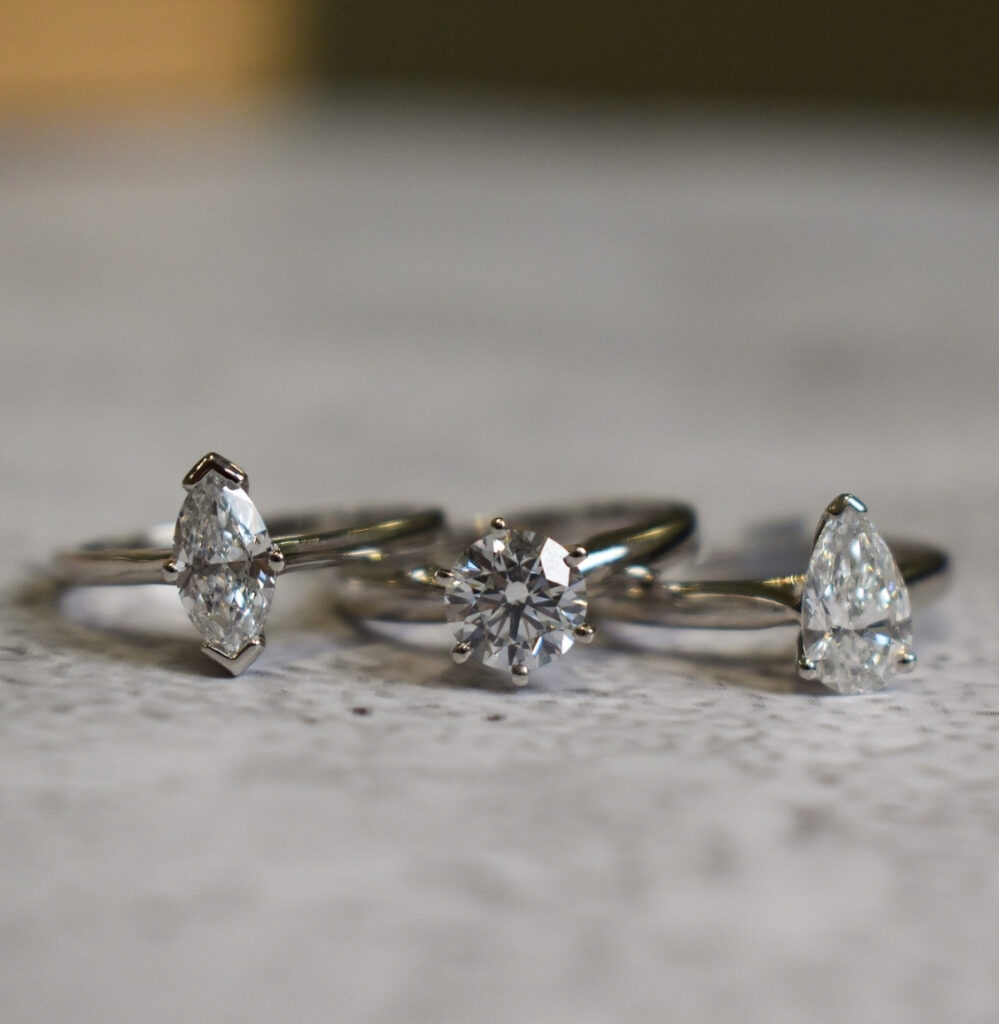
Both make a ring that will last a lifetime. The real difference comes down to three things: upkeep, feel, and cost.
- Platinum is white all the way through. It never needs plating. It is heavier, and it costs less than most people expect.
- White gold is lighter and resists surface marks a little better. It needs replating every one to three years to stay bright white.
If you want a white ring with no upkeep, choose platinum. If you like a lighter ring, or you are matching white gold you already own, choose white gold.
We work with both metals every day at the bench. Here is what we see.
What is the difference?
White gold is yellow gold mixed with white metals such as palladium and silver. 18ct white gold is 75 per cent gold. Its natural colour is a pale, warm grey, so most white gold carries a thin plate of rhodium to make it bright white.
Platinum is a white metal to begin with. The platinum in your ring is 95 per cent pure. Nothing is plated on top, so the colour you see is the colour all the way through.
You can tell them apart by the hallmark. Platinum is stamped 950. 18ct white gold is stamped 750, and 9ct is stamped 375.
Side by side
| Feature | Platinum | 18ct white gold |
|---|---|---|
| Colour | White all the way through | Warm grey under a bright white plate |
| Upkeep | A polish now and then | Replate every one to three years |
| Marks | Marks more easily, but keeps its metal | Resists marks a little better, but loses a little metal each time |
| Weight | About a third heavier | Lighter on the hand |
| Claws | Wear slowly and grip stones well | Wear sooner and need checking more often |
| Skin | 95 per cent pure, rarely causes a reaction | Depends on the alloy under the plating |
| Hallmark | 950 | 750 |
Which costs more?
For years the answer was simple. Platinum cost more. Many guides online still say so. They are out of date.
In September 2026, an ounce of gold costs more than twice as much as an ounce of platinum. An 18ct white gold ring is three quarters gold. So the metal in it now costs more than the metal in the same ring made in platinum. That holds even though platinum is denser and the ring takes more of it.
Platinum does take longer to work. It melts at a higher temperature, and it takes more time to polish. That labour closes some of the gap.
What does this mean for you? In our workshop, a platinum ring now often costs the same as the same design in 18ct white gold, and sometimes less. 9ct white gold still costs less than both.
Think about the years ahead too. White gold needs replating every one to three years, and most UK jewellers charge £40 to £75 each time. Replate every two years for twenty years and you have paid between £400 and £750. Platinum has no such cost.
Metal prices move every day. Ask us to quote your ring in both metals. We will show you the two figures side by side.
Which lasts longer?
Both will outlast you if you look after them. They wear in different ways.
Platinum marks more easily than 18ct white gold. That surprises people. When platinum takes a knock, the metal moves aside and stays on the ring. Over the years those marks blend into a soft grey finish. Jewellers call it a patina. Some people love it. If you do not, a polish brings the shine back.
White gold resists surface marks a little better. When it does scratch, a little metal leaves the ring. Every polish takes a little more. Over decades, a white gold band gets thinner.
The part that matters most is the claws. They hold your stone. Platinum claws wear slowly. We retip white gold claws far more often than platinum ones. If your ring carries a stone you would hate to lose, that counts for a lot.
What happens when your ring needs work?
No retailer will tell you this part, because they do not do the work. We do.
Most rings come back to a jeweller at some point. Fingers change size. Claws wear. A wedding band has to fit alongside.
- Resizing. We resize both metals. A white gold ring needs replating afterwards, because the work takes the plating off. A platinum ring does not.
- Repairs. Platinum needs more heat and more care than gold, and some jewellers will not touch it. We have three laser welders. They let us work on platinum right beside a stone without heating the whole ring.
- Retipping. We rebuild worn claws in both metals, in-house. Your ring never leaves the building. See our jewellery repairs page for more.
Which is better for sensitive skin?
Platinum. It is 95 per cent pure and rarely causes a reaction.
Most white gold made in the UK today uses palladium and not nickel. Some older rings, and some rings bought abroad, contain nickel under the plating. You may not notice until the plating wears thin.
Has white gold ever irritated your skin? Choose platinum.
Matching your engagement ring and wedding band
Use the same metal for both.
Two rings that sit together rub together, all day, for years. Different metals wear at different rates, so one ring slowly cuts into the other. The colours drift apart as well. Newly plated white gold and platinum look the same on day one. Two years on, they do not.
Is your engagement ring an unusual shape? We make shaped wedding bands to sit flush against it. We will show you a CAD preview, and a printed model you can try on, before we make anything.
So which should you choose?
Choose platinum if:
- You want a white ring with no replating
- You like a ring with some weight to it
- Your ring has a valuable stone in a claw setting
- Your skin reacts to some metals
- You work with your hands and will not take the ring off
Choose white gold if:
- You like a lighter ring
- You are matching a white gold ring you already own
- You want 9ct to keep the cost down
- You like a very bright, mirror finish and do not mind replating to keep it
Still not sure? Come in and hold both. Feel the difference in weight. We will put an unplated white gold ring next to a platinum one, so you can see the true colour of each.
Planning a proposal? Our guide to building an engagement ring walks you through the rest.
Come and see both metals in our Glasgow workshop
There is no pressure and no obligation. A jeweller will sit down with you, answer your questions, and quote your ring in both metals.
If it means something to you, it matters to us.
White gold or platinum: your questions answered
Is platinum better than white gold?
Neither is better for everyone. Platinum is white all the way through, never needs plating, and its claws wear slowly. White gold is lighter and resists surface marks a little better, but it needs replating every one to three years. If you want a white ring with no upkeep, choose platinum.
Is platinum more expensive than white gold?
Not any more. In September 2026, an ounce of gold costs more than twice as much as an ounce of platinum. An 18ct white gold ring is three quarters gold, so platinum now often costs the same as 18ct white gold, and sometimes less. 9ct white gold still costs less than both.
Can you tell the difference between white gold and platinum?
Not on day one. A newly plated white gold ring and a polished platinum ring look the same. The difference shows with wear. White gold turns warmer as the plating thins. Platinum stays white and takes on a soft grey finish. You can also check the hallmark. Platinum is stamped 950, and 18ct white gold is stamped 750.
Does platinum scratch easily?
Platinum marks more easily than 18ct white gold. When it does, the metal moves aside and stays on the ring. Over the years those marks blend into a soft grey finish that jewellers call a patina. A polish brings back the shine whenever you want it.
Can you wear a white gold ring next to a platinum ring?
You can, but we advise against it for rings that sit together every day. The two metals wear at different rates, and the colours drift apart as the white gold plating thins. Match your wedding band to the metal of your engagement ring.
Can you change a white gold ring to platinum?
You cannot convert the metal, but we can remake the ring. We take the stones out of your white gold ring and set them in a new platinum mount, made to the same design or a new one. The work happens in our Glasgow workshop, and your stones never leave the building.
Is white gold or platinum better for sensitive skin?
Platinum. It is 95 per cent pure and rarely causes a reaction. Most white gold made in the UK today uses palladium and not nickel, but some older rings and rings bought abroad contain nickel under the plating. If white gold has ever irritated your skin, choose platinum.